
From 10am – 1pm AEST on Friday 5 June, Interconnect Chief Investigators Morgan Carpenter, Bridget Haire, and Bonnie Hart will speak at a public lecture and panel discussion aimed at critically examining how innate variations of sex characteristics (IVSC) are understood, governed, and lived across different contexts – and providing advice on how to practice meaningful IVSC inclusivity.
This event is hosted by University of New South Wales’ CoPQTI, InterAction for Health and Human Rights, and Interconnect, with free virtual and in-person attendance options.
About the event
Health and social issues for people living with innate variations of sex characteristics (IVSC), often referred to as intersex variations or differences of sex development, are frequently collapsed into discussions of sex and gender. This is a particular problem with LGBTIQ+ research that aims to be inclusive but may in fact render IVSC experience invisible. The result is that IVSCs remain misunderstood, medicalised, and marginalised within dominant research, social, and clinical frameworks. Hosted by CoPQTI and InterAction, this public lecture and panel discussion aims to critically examine how IVSC is understood, governed, and lived across different contexts. It will also provide advice on how to practice meaningful IVSC inclusivity.
This is a hybrid event and will be available both in person and online. Participants are encouraged to engage in discussion and contribute questions in advance.
Panelists
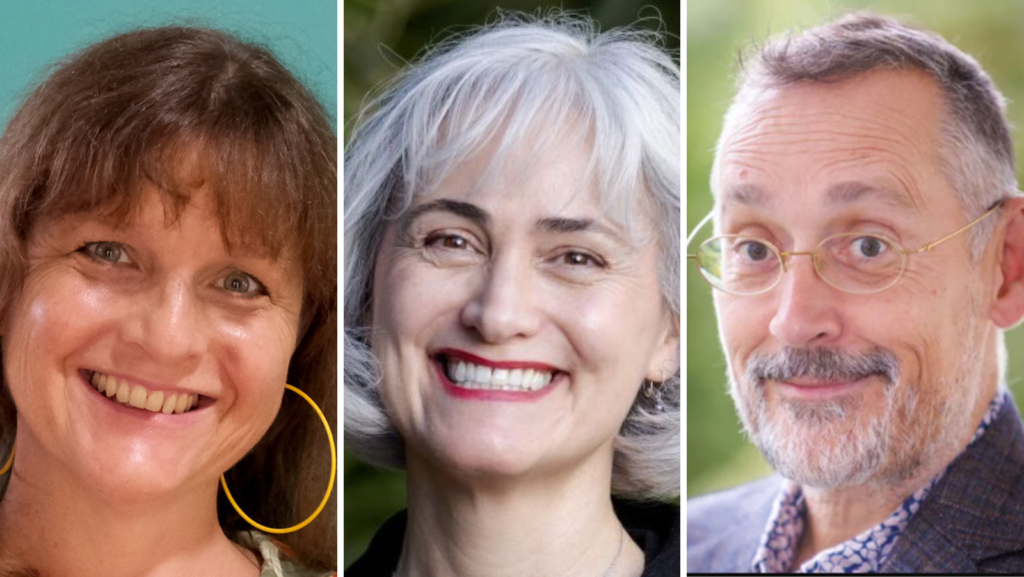
Associate Professor Morgan Carpenter
Associate Professor Morgan Carpenter is an internationally recognised expert on human rights and ethics in relation to the treatment of people with innate variations of sex characteristics (also known as intersex variations or differences of sex development). He is an Associate Professor at Sydney Health Ethics in the University of Sydney’s School of Public Health, and leads the Interconnect Health Medical Research Future Fund Research Project on the health and wellbeing of people with innate variations of sex characteristics. He is the Executive Director of InterAction for Health and Human Rights, a national charity that engages in policy work, and provides psychosocial support, peer support and training services to promote the health and human rights of people with innate variations of sex characteristics. He is also a member of the Australian Capital Territory’s new Restricted Medical Treatment Assessment Board, and the NSW government’s LGBTIQ+ Advisory Council. Morgan has been contracted to the UN Office of the High Commissioner for Human Rights, the ACT government and the Australian Institute of Health and Welfare, and collaborates with the World Health Organization. He is or has been a reference or advisory group member for the Australian Department of Health and Aged Care, Australian Bureau of Statistics and New South Wales Health.
Bonnie Hart
Bonnie Hart is the founding Service Manager of the intersex psychosocial support service InterLink, the Deputy Executive Director of InterAction for Health & Human Rights, a Research Fellow (Intersex Psychosocial Models of Care) and PhD candidate with the University of Southern Queensland, and a Chief Investigator and Lived Experience Lead with the Interconnect Health Research Project. Bonnie uses her lived experience as an intersex woman to work with community members as an intersex peer worker and systemic advocate. She provides content expertise as a researcher, educator, consultant and mental health program designer. Bonnie was an organising signatory of the 2017 Darlington Statement of intersex community consensus and founder of the YellowTick intersex education and inclusion initiative.
Associate Professor Bridget Haire
Bridget Haire is a senior research fellow at the Kirby Institute, and an associate of the Australian Human Rights Institute. She lectures in public health and medical ethics. Prior to academia, Bridget worked in HIV and sexual and reproductive health for more than 20 years as a journalist, editor, policy analyst and advocate. She is a former consultant for the Australia-China Human Rights Technical Co-operation Program on sexual and reproductive health rights for the Australian Human Rights Commission. From 2015-18 Bridget was President of Australian Federation of AIDS Organisations (AFAO) and a member of the Ministerial Advisory Committee on Blood Borne Viruses and Sexually Transmissible Infections. She also served on the Data Safety Monitoring Board for the South African HIV prevention study CAPRISA 008 as a medical ethicist, and is the medical ethicist on the NSW HIV Assessment Panel for People who Put Others at Risk of HIV. Her research interests are ethical issues in infectious disease control with an emphasis on underserved or marginalised populations, gender, and sexual and reproductive health.
Agenda
10:00 am – 11:30 am – Lecture
The lecture will cover ground on the medical and psychosocial perspectives on innate variations of sex characteristics. It examines how clinical practices and social contexts intersect to shape experiences of care, wellbeing, and support, while engaging with broader ethical questions of autonomy and consent.
11:30 am – 12:00 pm – Morning Tea
12:00 pm – 1:00 pm – Panel
Following the lecture, Associate Professor Morgan Carpenter and Ms Bonnie Hart will be joined by Associate Professor Bridget Haire in a panel discussion. This lively conversation will cover appropriate terminology and framing, and importance of decoupling from gender and sexuality; human rights and subsequent policy and legal developments; and medical and psychosocial perspectives, including aligned debates. Chaired by Dr Kerryn Drysdale.
Location
The Berg Family Foundation Seminar Room, The Kirby Institute, UNSW + online option